— February 10, 2026 —

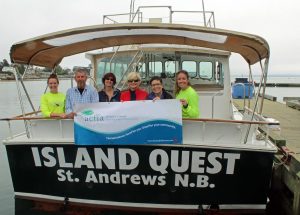
That’s why the Atlantic Canada Fish Farmers Association (ACFFA) is proud to have recently joined the Agricultural Alliance of New Brunswick. As part of this alliance, we look forward to working alongside farmers and food producers who are working diligently in New Brunswick and throughout the Atlantic Provinces to share knowledge, strengthen connections, and highlight the essential role that food producers – on land and at sea – play in feeding our communities. Together, we are stronger, and together we can better advocate for a resilient, secure Canadian food system.

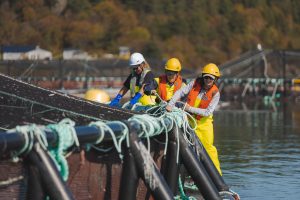
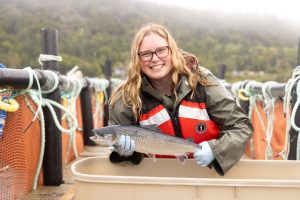
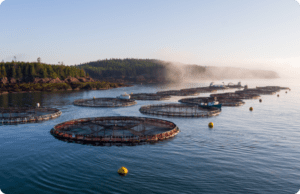
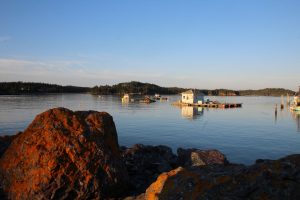
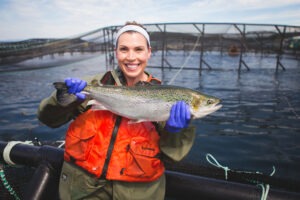
Atlantic Canada’s finfish farmers have been producing sustainable, nutritious protein for decades. Today, finfish farming – salmon and trout – is one of the region’s most significant economic drivers, co-existing with wild capture fisheries since its inception and supporting coastal communities across Atlantic Canada.
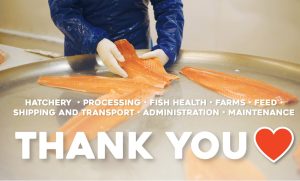
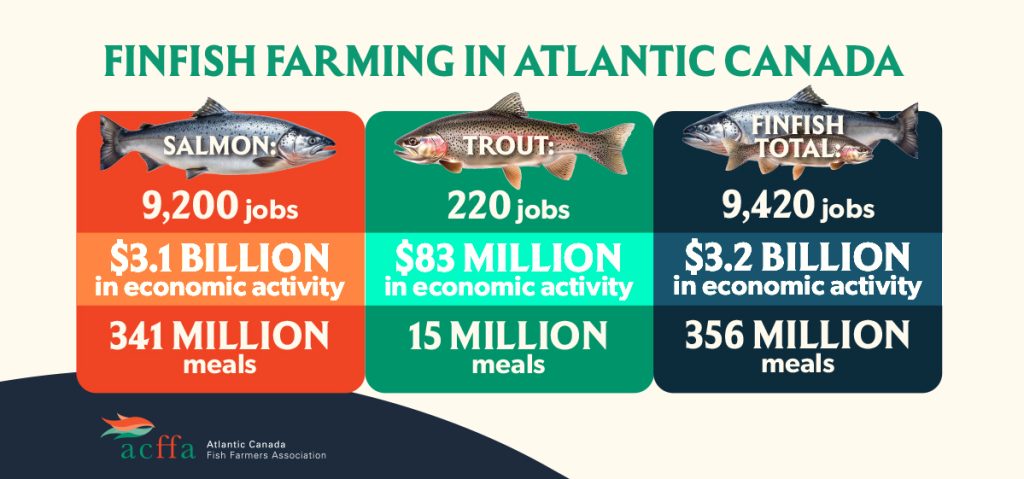
The numbers tell a powerful story. Finfish farming employs more than 9,400 people in our region, generates $3.2 billion in total economic output, and produces over 356 million meals annually (RIAS Inc., based on 2024 Statistics Canada data). The sector also supports more than 1,400 Atlantic Canadian businesses that supply goods and services, generating over $600 million in annual sales. These are good jobs, family-supporting incomes, and economic activity that matters deeply to rural and urban communities alike.
Beyond economics, finfish farming is a critical pillar of Canada’s food security. In an increasingly uncertain world, the ability to grow more of our own food – sustainably and responsibly – is not optional. It is essential. As Prime Minister Mark Carney recently stated at the World Economic Forum in Davos, “A country that can’t feed itself, fuel itself, or defend itself has few options.” Canada cannot afford to take its food system for granted.
Atlantic Canadian finfish farmers are ready to do more. With long-term regulatory certainty and supportive public policy, our sector is well positioned to feed more Canadians, strengthen coastal economies, and deliver high-quality protein with a lower environmental footprint.
However, progress is being slowed by misinformation, often intentionally released by foreign-funded activist groups seeking to influence federal and provincial policymakers. Activist-driven narratives that ignore evidence-based science threaten investment, innovation, and confidence in Canadian aquaculture. We are witnessing the consequences in British Columbia, where ideological federal decisions to remove ocean salmon farms are negatively impacting jobs, GDP, production and capital investment interest. The ripple effects from this misfortune resonate in Atlantic Canada. A reversal of the BC decision is needed to restore Canada’s image as an investment-friendly country where responsible growth in our sustainable farming sector is welcomed.
Canada needs a different approach: one rooted in science, transparency, and strategic sector development. Seafood farmers should be formally recognized as agri-food producers, with leadership and coordination through Agriculture and Agri-Food Canada. Federal and provincial governments must reject misinformation and instead champion responsible aquaculture growth, backed by evidence-based regulation.
With aligned leadership from governments and industry, we can accelerate the adoption of new technologies that further reduce environmental impacts, support climate goals, and grow our food supply. This includes investments in skills training, research and innovation, immigration, housing, and community services that enable both sector and community growth.
Our industry is uniquely positioned to scale up responsibly. Aquaculture has one of the youngest, most diverse workforces in Canadian food production, with an average employee age of 40 and strong representation from women and newcomers. We are prepared – and eager – to grow more food with less environmental impact if given the opportunity.
This Canada Agriculture Day, let’s recognize that agriculture doesn’t stop at the shoreline. Aquaculture is agriculture. With thoughtful leadership and a strategic, science-based approach, finfish farming can help secure a resilient food future for Atlantic Canada – and for Canada as a nation.