— April 8, 2026 —

On behalf of the Board and members of the Atlantic Canada Fish Farmers Association (ACFFA), I am writing to respond to the Government of Canada’s recent announcement of a $3.8 billion investment in nature protection, including $81.7 million dedicated to wild Atlantic salmon conservation and restoration.
Atlantic Canada’s fish farmers support meaningful, science-based efforts to restore and protect wild Atlantic salmon populations. We share these waters. We are active partners in conservation.
However, as details of this funding are finalized, we are unequivocal: no public funds should be allocated to the Atlantic Salmon Federation (ASF).
At a time when Canada must strengthen its food security, economic resilience, and rural communities, it is indefensible to allocate taxpayer dollars to an organization actively working to dismantle a responsible, highly regulated food production sector.
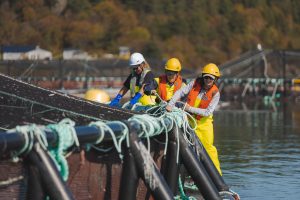
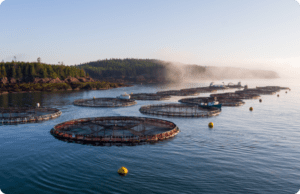
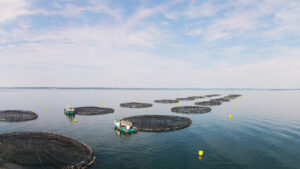
Atlantic Canada’s finfish farmers have been producing sustainable, nutritious protein for more than 40 years. Today, our sector employs over 9,400 people, generates $3.2 billion in economic output, and produces more than 356 million meals annually (RIAS Inc., based on 2024 Stats Can data). We support more than 1,400 local businesses, contributing over $600 million in additional economic activity.
These numbers represent real people, real families, and real communities. Atlantic Canada is nearly 40 percent rural – double the national average. In these communities, year-round, stable employment is not a given. Our sector provides exactly that: well-paying, full-time jobs that sustain coastal regions and keep communities viable.
Public support reflects this reality. In February 2026, polling conducted by Narrative Research Associates found that 85 percent of Atlantic Canadians support aquaculture. Support is strong across every province in the region, demonstrating broad public recognition of the sector’s value.
Beyond economics, our industry is a cornerstone of Canada’s food sovereignty. In an increasingly unstable global environment, the ability to produce safe, high-quality protein domestically is essential. Salmon farming is one of the most efficient and environmentally responsible ways to do so.
Our sector operates under one of the most rigorous regulatory frameworks in the world, with oversight from multiple federal and provincial agencies. We employ best practices such as single year-class stocking, bay management areas, and coordinated fallowing. We maintain third-party certifications and continuously invest in research, innovation, and improved farming practices.
We are also active partners in conservation.
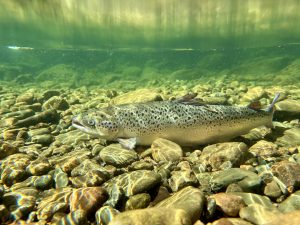
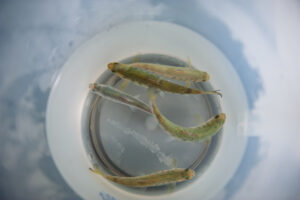
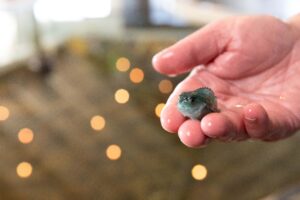
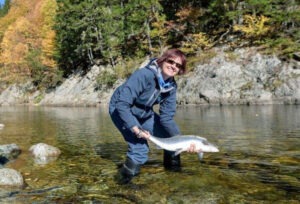
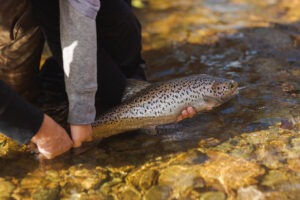
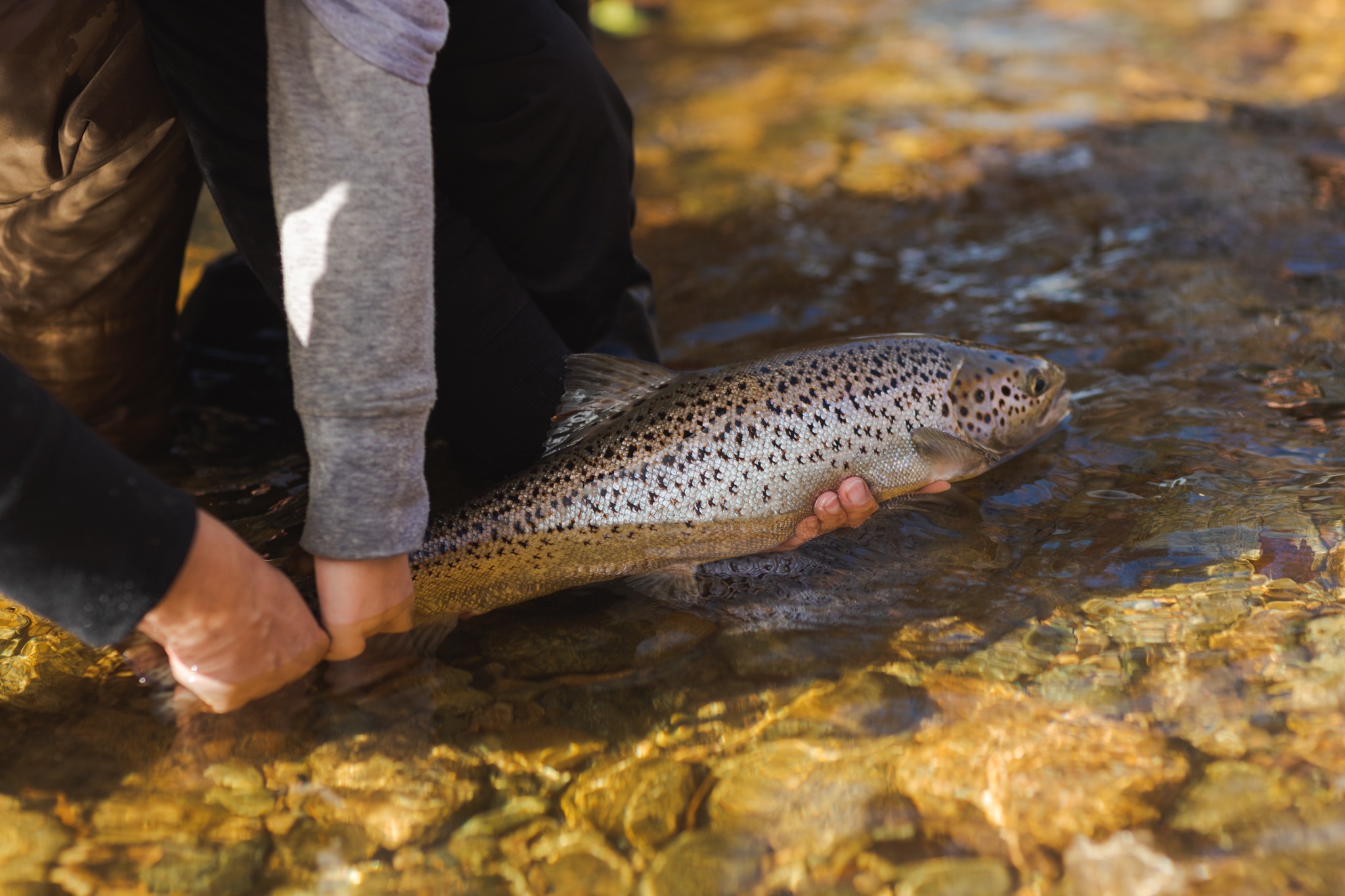
A leading example of what effective, collaborative conservation looks like is the Fundy Salmon Recovery program – bringing together Indigenous partners, aquaculture operators, scientists, and governments, including Fort Folly First Nation, Cooke Aquaculture, the University of New Brunswick, the Province of New Brunswick, Parks Canada, and Fisheries and Oceans Canada. This initiative is delivering groundbreaking, measurable results: more than 13,000 mature wild salmon have been successfully returned to inner Bay of Fundy rivers, with over 700 tagged fish returning – the highest returns seen in decades. Central to this success is the integration of aquaculture expertise, including the world’s first wild salmon marine conservation farm on Grand Manan Island, New Brunswick, where young fish are reared using advanced farming practices to significantly improve survival. It is a proven, science-driven model that is reversing decline and rebuilding wild populations.
This is what responsible, science-based conservation looks like: collaboration, transparency, and outcomes. It stands in stark contrast to the approach taken by the ASF.
The ASF is a foreign-funded, activist organization that has repeatedly engaged in campaigns designed to misrepresent, undermine, and ultimately dismantle Atlantic Canada’s salmon farming sector while providing negligible outcomes for genuine conservation. Their activities are strategic, coordinated efforts to de-market farmed salmon and erode public trust in a vital Canadian food-producing industry.
Campaigns such as “Off the Table” and salmon.info are not neutral public education initiatives. They are deliberate, well-funded communications strategies designed to spread misleading and incomplete information about farmed salmon, with the explicit goal of discouraging its consumption and shutting down the sector. These efforts are harmful and deceptive.
Such conduct raises serious concerns under the standards of the Competition Bureau. As you know, the Competition Bureau has expressly included the raising of funds for charitable or non-profit purposes as a business activity that is subject to the deceptive marketing provisions of the Competition Act. We believe these campaigns warrant formal investigation as intentionally deceptive marketing practices aimed at damaging a lawful Canadian industry.
Organizations that engage in this type of activity should not benefit from charitable status. Nor should they receive public funding.
We are therefore calling for two immediate actions:
- A formal review of the ASF’s charitable designation based on it acting merely as a conduit for foreign entities and deceptive marketing practices.
- A clear commitment that no federal funding for salmon conservation be directed to the ASF during this review – or thereafter.
Atlantic Canada’s fish farmers are responsible stewards of the ocean, advancing innovation, protecting wild salmon, and providing stable, year-round employment that sustains families and communities across the region. Our work strengthens Canada’s food security, economy, and global reputation as a producer of safe, high-quality protein.
We call on the Government of Canada to ensure taxpayer dollars fund true conservation, uphold the integrity of our food systems, and reject organizations whose activities threaten both our rural communities and our nation’s ability to grow its own food.
Sincerely,
Tom Taylor
Executive Director
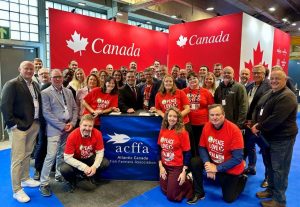
Atlantic Canada Fish Farmers Association