— February 17, 2026 —

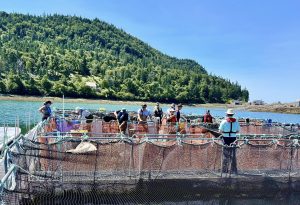
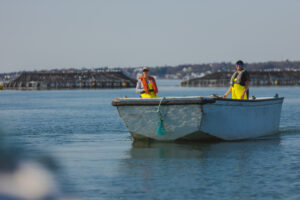
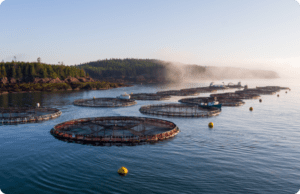
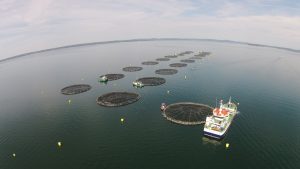
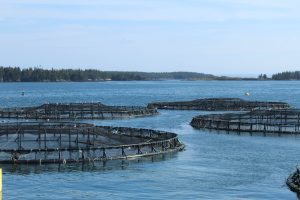
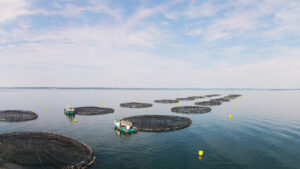
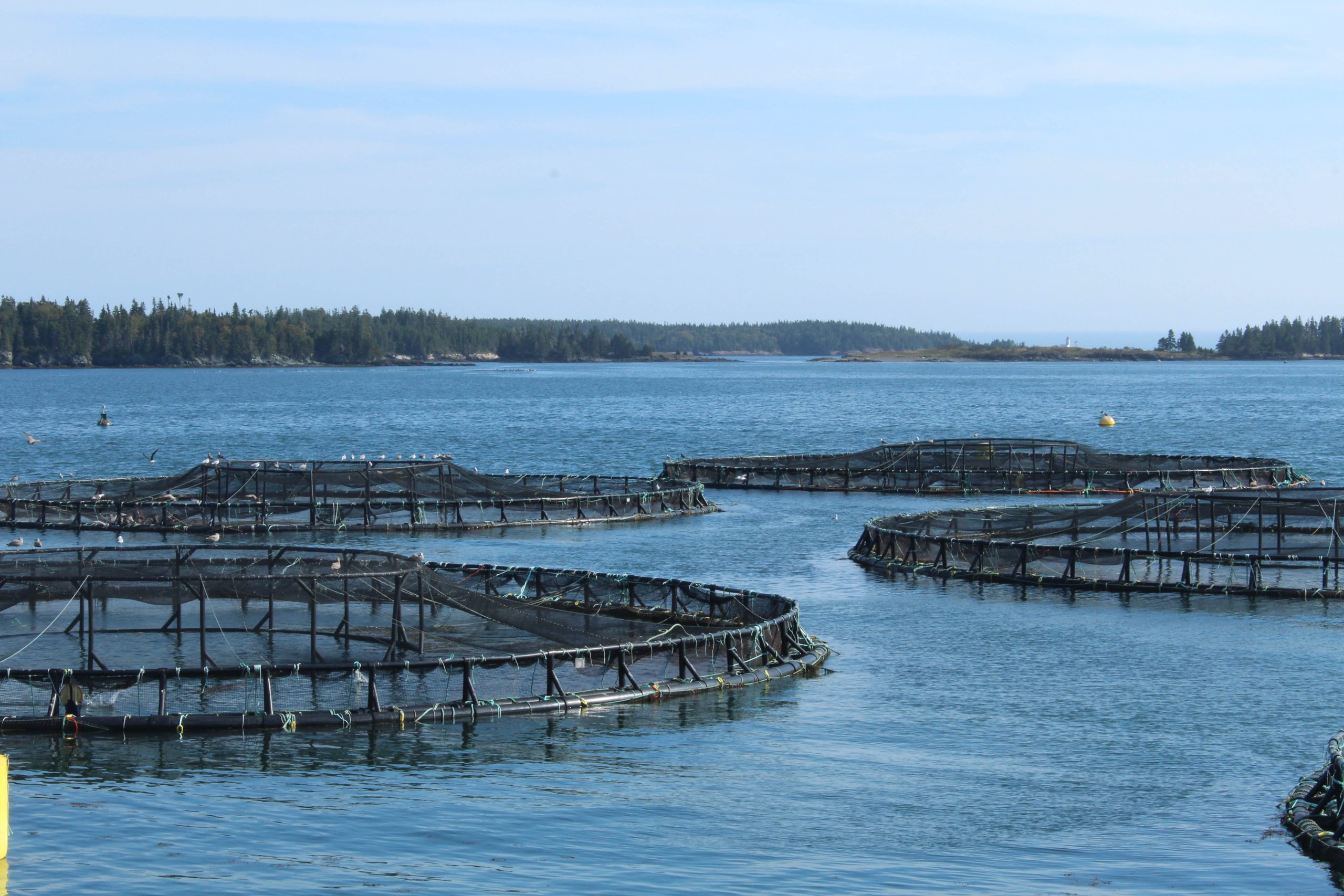
The approval allows for the addition of six cages to the site, bringing the total number of cages to 20. The ARB’s decision is clear that Kelly Cove Salmon is operating its farm well within the regulations and legislation that oversee the sector. The decision states: “The Board is satisfied that there will be no negative, or any, impact of this amendment on any of the eight statutory conditions.” (p. 39 NSARB 2023-001 Decision). This decision reflects a careful, science-driven regulatory process and provides certainty for responsible operators investing in long-term sustainability.
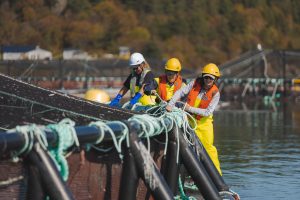
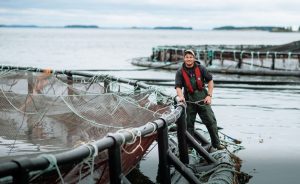
At a time of growing climate pressures, global trade tensions, and rising food insecurity, Atlantic Canada’s finfish sector has an increasingly important role to play. Finfish farming supports coastal jobs, strengthens local economies, and produces nutritious food close to home.
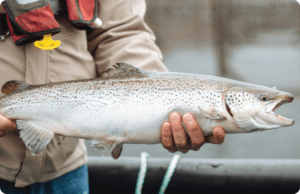
Marine finfish farming is one of the most responsible and climate-friendly ways to feed a growing global population. It has minimal environmental impact, uses little freshwater, and has the lowest carbon footprint of any animal protein. Atlantic Canada is a global hub for innovative and sustainable aquaculture, supported by world-class science and research. Decades of peer-reviewed studies show salmon farms have little long-term environmental impact on the marine environment, including lobster populations.
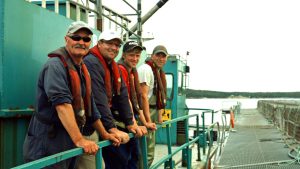
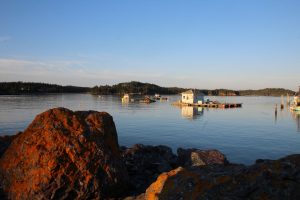
Fish farmers have worked alongside traditional fishers on shared waterfronts for more than 40 years, contributing to vibrant, multi-use coastal communities. Public support remains strong, with 81 per cent of Atlantic Canadians expressing support for salmon farming, according to Narrative Research (2024) – a level of support that has remained steady for six consecutive years.
The economic contribution of finfish farming is significant. A new report issued by the Canadian Aquaculture Industry Association shows finfish farming supports 734 jobs in Nova Scotia, generates $283 million in total economic output, and produces the equivalent of 60 million meals each year. Across Atlantic Canada, the sector supports 9,420 jobs, contributes $3.2 billion to the economy, and produces 356 million meals annually.
Now more than ever, Canada cannot take food security for granted, and growing more of our own food – sustainably and responsibly – must be part of the solution.
Finfish farming strengthens Canada’s food security, supports coastal communities, and delivers sustainable, nutritious protein. Atlantic Canadian finfish farmers have led this work for decades – and with long-term regulatory certainty, they are poised to feed more Canadians and help secure a resilient food future.
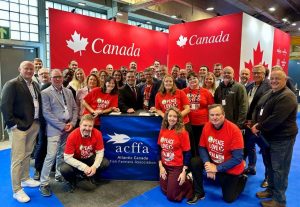
The Atlantic Canada Fish Farmers Association (ACFFA) represents farmers, feed producers, and service & support organizations. For nearly four decades, ACFFA has served as the regional voice of the salmon farming sector, advocating for research-driven, environmentally responsible, and commercially sustainable aquaculture.
Tom Taylor
Executive Director
Atlantic Canada Fish Farmers Association